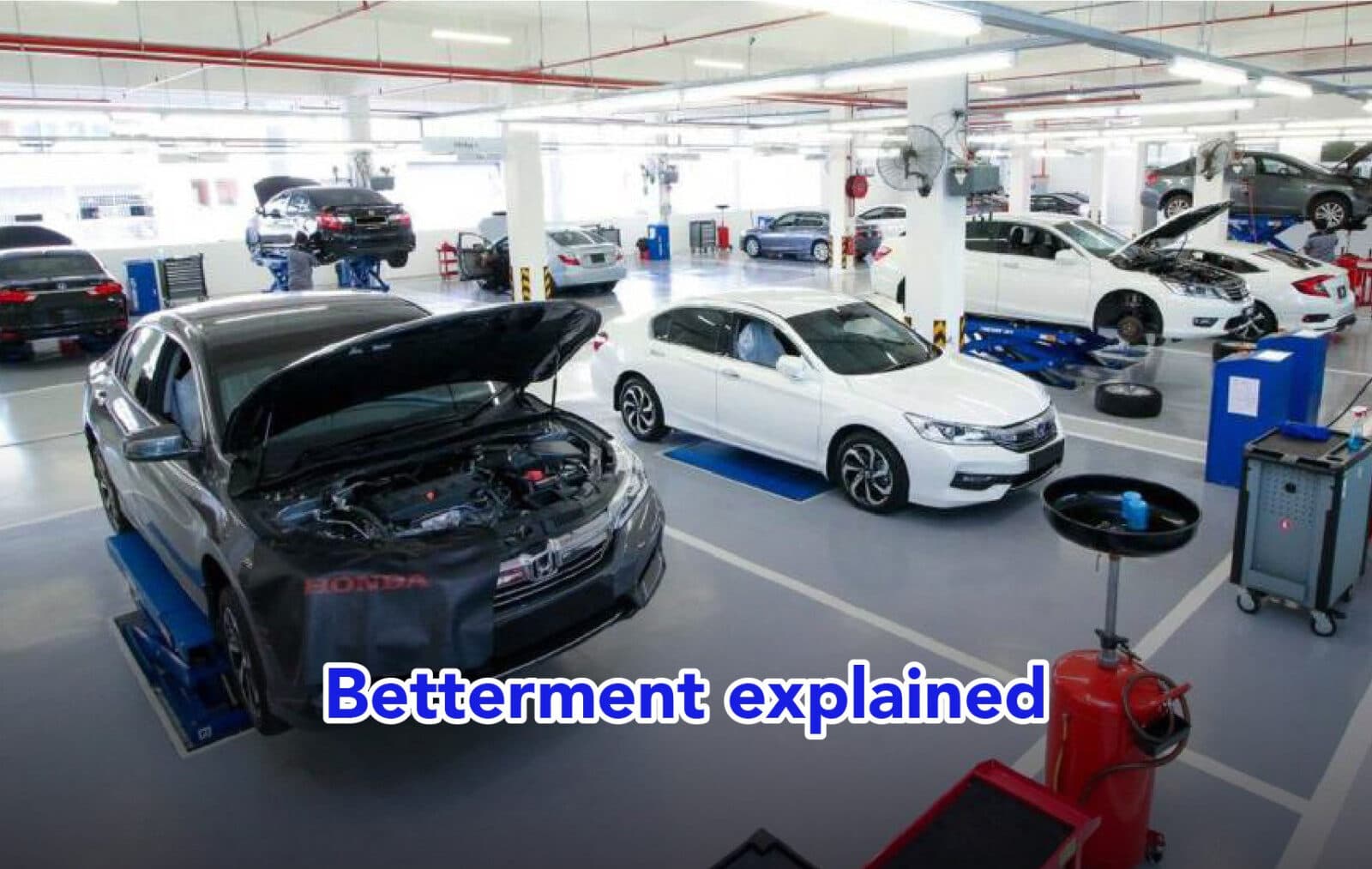
When you make a car insurance claim, you may come across a term called betterment.
The term can be confusing, especially if you have never made a claim before. In simple terms, betterment is the portion of the cost you may need to pay when an old car is repaired using a new original replacement part.
Here’s what you need to know about betterment, how it is calculated and how a waiver of betterment can help reduce your out-of-pocket cost.
What is betterment in car insurance?
Betterment is the amount a policyholder may need to contribute when a damaged part is replaced with a new original part during a covered repair.
The reason is simple. A new part may improve the condition of an older vehicle compared with the damaged or worn part that was previously fitted.
Betterment generally applies to cars that are 5 years old or older when new original parts are used for repairs. The applicable percentage increases as the vehicle gets older.
For example, if a new replacement part costs RM3,000 and the applicable betterment rate is 25%, you would pay RM750 towards the betterment, while the remaining RM2,250 would be covered by the insurer, subject to the policy terms and claim assessment.
Betterment applies to the replacement part cost. Labour charges are treated separately.
When does betterment apply?
Betterment generally applies when a damaged part on a vehicle aged 5 years or older is replaced with a new original part.
The current scale used for motor claims is:
Vehicle age
Betterment rate
Below 5 years
0%
5 years
15%
6 years
20%
7 years
25%
8 years
30%
9 years
35%
10 years and above
40%
The vehicle age is calculated based on the applicable registration or manufacturing date, depending on whether the vehicle is locally assembled or imported/reconditioned.
For example, if your 7-year-old car needs a new original part costing RM3,000:
RM3,000 × 25% = RM750
You would therefore contribute RM750 towards the betterment amount, while the remaining RM2,250 is covered under the claim, subject to the policy and assessment.
Why do insurers charge betterment?
Betterment is intended to account for the improvement a vehicle receives when an old or worn component is replaced with a brand-new original part.
For example, replacing an old component with a brand-new original part means the vehicle receives a newer component than the one it had before the accident.
Instead of the insurer paying the entire cost of that improvement, the policyholder contributes the applicable betterment amount.
Can betterment apply if another driver caused the accident?
The treatment of betterment depends on the type of claim and the applicable policy and claims process.
If you are making a claim involving another driver’s insurer, do not assume that betterment will automatically be reimbursed by the other party.
Your insurer or claims handler can explain whether betterment applies to your specific claim and how the amount will be handled.
A waiver of betterment is an optional add-on that can remove the betterment amount you would otherwise have to pay when eligible damaged parts are replaced with new parts.
For example, imagine your 7-year-old car needs a new original part costing RM3,000.
Without a waiver:
RM3,000 × 25% = RM750 betterment
With an applicable waiver of betterment, the RM750 betterment contribution may be waived, subject to the insurer’s terms and eligibility.
This means you could avoid paying the betterment portion of the replacement part.
However, the waiver does not mean every repair cost is automatically covered. Other policy conditions, excesses and claim requirements may still apply.
A waiver may be worth considering if you own an older car and want to reduce the amount you may need to pay for new original replacement parts after an accident.
However, eligibility is not the same for every insurer.
Some insurers may offer the add-on for vehicles up to a certain age, while others may have different conditions. BJAK’s current car insurance information notes that waiver of betterment is generally available for some vehicles aged 5 years and above, with insurer-specific limits that can extend to around 10–15 years.
Always check the actual quotation and policy terms before adding the coverage.
Is waiver of betterment worth paying for?
It depends on your car and how much the add-on costs.
It may be more useful for an older vehicle where replacement parts are expensive. A single accident involving several new original parts could result in a sizeable betterment contribution.
On the other hand, you may decide that the additional premium is not necessary if your potential betterment cost is relatively low.
A simple way to decide is to compare:
Cost of waiver of betterment vs. Potential betterment amount you may have to pay
For example, if the add-on costs RM100 but a future claim could involve RM1,000 in betterment, the add-on may be worth considering.
This is only an illustration. Actual premiums and betterment amounts depend on the insurer, vehicle and claim.
Does waiver of betterment cover labour charges?
No.
Betterment relates to the additional cost associated with replacing a damaged part with a new original part.
Labour charges are separate and remain subject to your policy coverage, repair assessment and claim terms.
What should you check before buying the add-on?
Before adding waiver of betterment to your car insurance policy, check:
Whether your vehicle is eligible
The maximum vehicle age allowed
The cost of the add-on
What parts are covered
Whether there are any exclusions or limits
Whether other excesses still apply
The insurer’s current policy terms
Not every insurer offers the same add-on or conditions. BJAK currently compares car insurance from 16 licensed insurers and takaful operators, with add-on availability varying between providers.
Understand your car insurance before making a claim
Betterment is just one of the terms you may encounter when dealing with a car insurance claim.
Other terms such as excess, NCD, comprehensive cover and CART can also affect what you receive or pay during a claim.
Understanding these terms before an accident can make the claims process easier and help you avoid unexpected costs.
Betterment is the portion of the replacement-part cost that a policyholder may need to pay when a damaged part on an older vehicle is replaced with a new original part.
At what age does betterment start?
Betterment generally starts when the vehicle is 5 years old, with the applicable rate increasing as the vehicle gets older.
How much is the betterment rate?
The current scale starts at 15% for a 5-year-old vehicle and increases to 40% for vehicles aged 10 years and above.
Can I avoid paying betterment?
You may be able to avoid the betterment contribution by purchasing a waiver of betterment add-on, if your vehicle and policy are eligible.
Does every insurer offer waiver of betterment?
No. Availability, vehicle-age limits and other conditions vary between insurers. Check the current quotation and policy wording before purchasing.
Is betterment included in comprehensive car insurance?
Comprehensive insurance can cover repairs to your own vehicle after a covered accident, but betterment may still apply when new original parts are used on eligible older vehicles.
Does betterment include labour costs?
Generally, betterment applies to the cost of the replacement part. Labour costs are treated separately and remain subject to the policy and claim assessment.

 Nabil Farhan· · 6 min read