
BJAK Instalment Plan: Buy Now, Pay Later
 Nabil Farhan· · 4 min read
Table of contents
Paying for car insurance in one lump sum can sometimes feel expensive, especially when other monthly expenses are due at the same time.
With the BJAK instalment plan, eligible customers can choose a payment option that allows the insurance cost to be spread across instalments, subject to the available plan and its terms.
This can make it easier to manage your cash flow while keeping your car insurance up to date.
Why Choose BJAK’s Instalment Plan?
The main benefit of an instalment plan is flexibility in payment.
Instead of paying the full insurance premium at once, you may be able to spread the cost over a selected instalment period.
This can be useful if:
- You want to manage your monthly budget.
- Your car insurance renewal is due but you prefer not to make one large payment.
- You want to spread your insurance cost across several payments.
- You prefer a payment option that suits your cash flow.
The exact instalment options, eligibility and terms depend on the payment plan available to you.
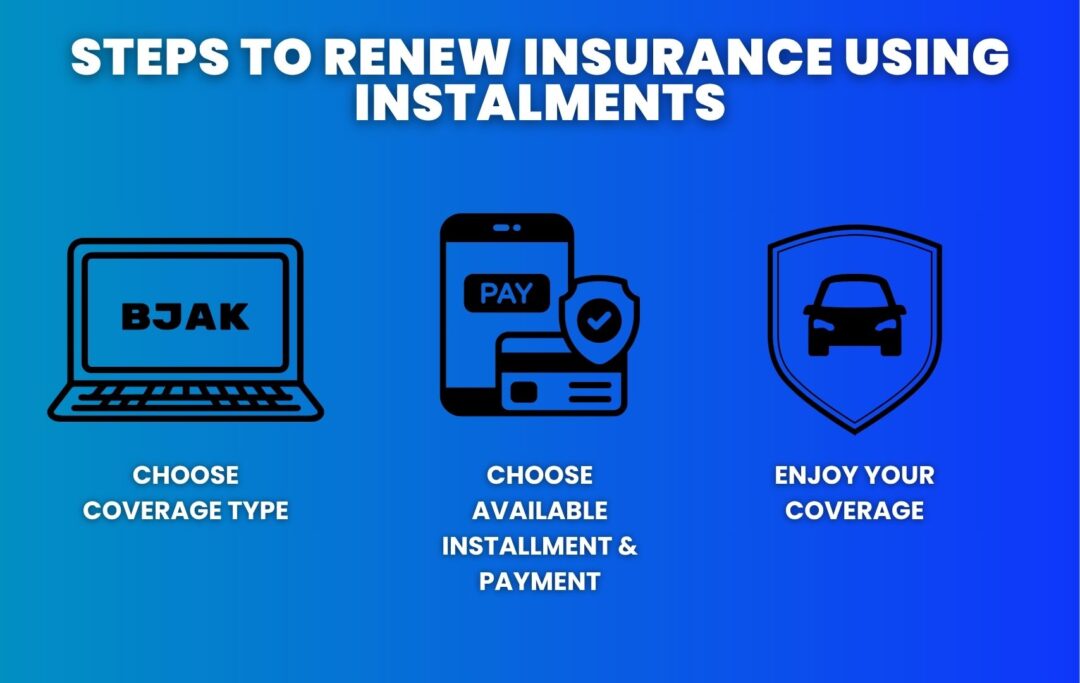
How Does the BJAK Instalment Plan Work?
The process is straightforward:
1. Get your car insurance quotation
Start by getting a car insurance quotation through BJAK.
You can compare available options and choose a policy that suits your needs.
2. Select an available payment option
When making payment, check the available instalment options.
The payment period and terms can vary depending on the plan offered.
3. Complete your payment
Follow the payment instructions provided for your selected instalment plan.
Before confirming, check the total amount payable, instalment amount and payment schedule.
4. Keep your policy documents
Once your insurance purchase is completed, keep your policy documents and payment details for future reference.
Your insurance coverage is subject to the policy terms and the effective date stated in your insurance documents.
Does an Instalment Plan Change Your Insurance Coverage?
Choosing an instalment payment option does not mean you should assume that your policy has different coverage.
Your actual protection depends on the insurance policy you purchase and its terms and conditions.
For example, whether your policy includes comprehensive cover, third-party cover, windscreen protection, special perils or other add-ons depends on the policy selected.
It is therefore important to check your policy before making payment.
If you want to understand the different types of motor insurance and takaful available, you can read BJAK’s guide to comparing motor takaful options.
Is BJAK Instalment Plan the Same as Buy Now, Pay Later?
An instalment plan allows you to spread your insurance payment over a period instead of paying the entire amount upfront.
However, Buy Now, Pay Later (BNPL) and other instalment arrangements may have different terms, fees, eligibility requirements and payment schedules.
Always check the payment details shown during checkout before choosing a plan.
Make sure you understand:
- How much you need to pay upfront
- The amount of each instalment
- How many instalments you need to make
- The total amount payable
- Any applicable fees or charges
- What happens if a payment is late
How Much Does Car Insurance Cost?
Your car insurance premium is not the same for every vehicle.
The price can depend on factors such as:
- Vehicle model and age
- Sum insured or vehicle value
- NCD
- Type of insurance coverage
- Add-on protection selected
- Driver and vehicle details
- Insurer’s pricing and risk assessment
You can use the BJAK car insurance calculator to get an estimate and compare available options.
What About Roadside Assistance?
Roadside assistance is separate from the way you pay for your insurance.
If you are interested in BJAK’s roadside assistance service, you can learn more about BJAK VIP Road Assist and what’s included.
For insurance-related roadside assistance, the benefits available depend on the policy and insurer.
Always check what is included in your selected policy before assuming that towing or roadside assistance is covered.
Is the BJAK Instalment Plan Worth Considering?
If you prefer to manage your expenses month by month, an instalment plan can be a convenient option.
However, don’t look only at the monthly payment.
Compare the total amount you will pay, the payment period and any applicable fees before making your decision.
Most importantly, make sure the insurance policy itself provides the protection you need.
Conclusion
The BJAK instalment plan gives eligible customers another way to manage their car insurance payment.
Instead of paying the full amount at once, you may be able to spread the cost through an available instalment option, subject to the plan’s terms and eligibility.
Before choosing a payment plan, check the instalment amount, total cost, payment schedule and insurance coverage.
Ready to check your options?
Frequently asked questions
What is the BJAK instalment plan?
The BJAK instalment plan allows eligible customers to spread their car insurance payment across several instalments instead of paying the full amount upfront. Availability depends on the payment plan and its terms.
How does the BJAK instalment plan work?
First, get a car insurance quotation through BJAK. During checkout, review the available payment options, select an eligible instalment plan, and follow the payment instructions provided.
Who is eligible for the BJAK instalment plan?
Eligibility depends on the available payment plan, customer details, insurance quotation and applicable terms. The instalment option will be shown during checkout if it is available to you.
Does the instalment plan change my insurance coverage?
No. Your insurance coverage depends on the policy you select and its terms and conditions. The payment method does not automatically add or remove benefits such as comprehensive cover, windscreen protection or special perils.
Is the BJAK instalment plan the same as Buy Now, Pay Later?
Not necessarily. Buy Now, Pay Later and other instalment arrangements may have different fees, eligibility requirements, payment schedules and terms. Review the payment details shown during checkout before confirming your purchase.
How much will I pay through the instalment plan?
The amount depends on your insurance premium, selected coverage, payment period and any applicable fees or charges. Check the upfront payment, instalment amount and total amount payable before choosing a plan.
Will I be charged additional fees?
Additional fees may apply depending on the selected payment plan. Always review the complete payment breakdown, including any charges, before completing your purchase.
What happens if I miss an instalment payment?
The consequences of a missed or late payment depend on the terms of the selected payment plan. Check the payment provider’s conditions and contact the relevant provider if you expect difficulty making a payment.