Insurance & Roadtax Renewal After Vehicle Owner’s Death
 Nabil Farhan· · 5 min read
Table of contents
Introduction
When a vehicle owner passes away, the vehicle can still be used and its insurance and roadtax (LKM) can be renewed while the ownership transfer is being arranged.
However, there are specific procedures for vehicles that are still registered under the deceased owner’s name.
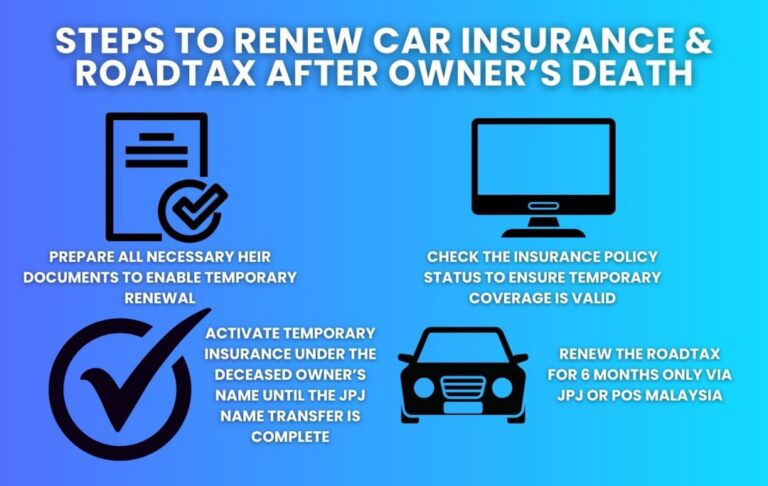
For roadtax, JPJ currently allows 6-month LKM renewal for each application when the registered owner has passed away. This can continue for up to five years, subject to JPJ requirements. The renewal for a deceased owner is currently handled through the existing channels rather than the MyJPJ app.
This guide explains what heirs should prepare, how to manage insurance and roadtax, and what needs to be done to transfer the vehicle ownership.
1. Documents Heirs Should Prepare
Before starting the process, prepare the relevant documents.
These may include:
- Death certificate of the registered vehicle owner.
- MyKad or identification document of the heir or authorised representative.
- Vehicle Registration Certificate (VOC), if available.
- Documents proving the heir’s relationship to the deceased.
- Letter of authorisation, if someone is handling the process on behalf of the heir.
- Relevant estate or inheritance documents for the ownership transfer.
The exact documents required can depend on the transaction.
For ownership transfer involving a deceased registered owner, JPJ accepts documents such as a High Court Order, Grant of Probate, Letter of Administration, Small Estate Distribution Order, AmanahRaya instruction, or Faraid Order, depending on the circumstances.
You can also refer to JPJ’s guide for non-voluntary vehicle ownership transfers for the latest requirements.
2. Can You Renew Insurance Under the Deceased Owner’s Name?
This part needs to be handled carefully because insurance and vehicle ownership are separate matters.
If the vehicle is still registered under the deceased owner, contact the existing insurer or a licensed insurance platform to check whether the motor policy can be renewed or continued during the estate administration process.
Before arranging a renewal, check:
- Whether the existing policy is still active.
- Who has the authority to manage the vehicle.
- Whether the insurer requires documents from the executor or administrator of the estate.
- Whether the insurer allows the required arrangement under its current policy terms.
You can check and compare car insurance options on BJAK, but the insurer will determine the applicable policy terms and documentation.
Important: Do not assume that a new policy can automatically be issued in the deceased person’s name simply because the vehicle registration has not yet been transferred. Confirm the arrangement with the insurer first.
3. How to Renew Roadtax After the Owner’s Death
JPJ has a specific provision for vehicles whose registered owner has passed away.
For a private vehicle:
- LKM can be renewed for 6 months per application.
- This arrangement can continue for a period of up to 5 years after the registered owner’s death.
- The vehicle must have valid insurance coverage for the LKM period being applied for.
- Renewal is currently handled through the existing JPJ channels for deceased owners.
- If the registered owner has been deceased for more than five years, JPJ requires documents showing that the estate distribution process has started or other documents for consideration.
According to JPJ’s current FAQ, roadtax renewal for a deceased owner’s private vehicle is not currently available through MyJPJ. Heirs should continue using the existing renewal channels until JPJ announces the digital function.
You can also refer to JPJ’s official LKM renewal guide for the latest requirements.
4. What Happens to MyJPJ After the Owner Dies?
The heir should not assume that the deceased owner’s MyJPJ account can simply be used to manage the vehicle.
JPJ states that the MyJPJ account may be blocked after the vehicle owner is confirmed to have passed away based on information from the National Registration Department (JPN).
The heir also cannot simply access the deceased owner’s eVOC through their own MyJPJ account.
The vehicle ownership and estate matters still need to be handled through the appropriate legal and JPJ procedures.
5. Transfer the Vehicle Ownership to the Heir
Temporary roadtax renewal is useful while the estate process is ongoing, but the longer-term solution is to complete the ownership transfer.
For a vehicle belonging to a deceased owner, JPJ requires appropriate inheritance or estate documents before the ownership can be transferred. These may include:
- Grant of Probate
- Letter of Administration
- Small Estate Distribution Order
- Faraid Order
- AmanahRaya instruction
- High Court Order
The appropriate document depends on how the deceased person’s estate is being administered.
Once the ownership transfer is completed, the vehicle will be registered under the new owner’s name and future insurance and roadtax arrangements can be made based on the new ownership details.
For more information, refer to JPJ’s official ownership transfer requirements.
6. What If the Roadtax Has Already Expired?
If the roadtax has expired, do not drive the vehicle on public roads until the required insurance and LKM are valid.
First, check the insurance status and determine whether the vehicle is eligible for LKM renewal.
If the registered owner has passed away, the renewal still needs to follow JPJ’s specific procedure for deceased owners.
If you are unsure about the status, contact JPJ before driving the vehicle.
Conclusion
Handling insurance and roadtax after a vehicle owner’s death can seem complicated, but the process becomes easier when you separate it into two parts: keeping the vehicle legally covered while the estate is being settled, and completing the ownership transfer.
For roadtax, JPJ currently allows a deceased owner’s private vehicle to be renewed for 6 months per application, subject to the relevant requirements. This can continue for up to five years after the owner’s death. The renewal is currently handled through existing channels rather than MyJPJ.
At the same time, heirs should work on obtaining the appropriate estate documents and completing the ownership transfer with JPJ.
For insurance, check with the insurer about the correct arrangement before renewing or changing the policy.
If you need to renew your car insurance, you can compare car insurance options through BJAK.
Frequently asked questions
Can I renew roadtax if the registered owner has died?
Yes. JPJ currently allows LKM renewal for a vehicle whose registered owner has passed away, subject to the required conditions.
The renewal is limited to 6 months per application and can continue for up to five years after the owner’s death.
Can I renew the roadtax through MyJPJ?
Not currently for a vehicle registered under a deceased owner.
JPJ states that heirs should continue using the existing renewal channels until the relevant MyJPJ function becomes available.
Can I renew roadtax for one year after the owner dies?
For a vehicle registered under a deceased owner, JPJ’s current rule allows 6 months per renewal application, rather than the usual one-year renewal.
How long can I continue renewing the roadtax under the deceased owner's registration?
JPJ currently allows the 6-month renewal arrangement for a period of up to five years after the registered owner’s death.
If the owner has been deceased for more than five years, documents showing that the estate distribution process has started may be required.
Can the heir use the deceased owner's MyJPJ account?
No. JPJ may block the deceased owner’s MyJPJ account after receiving confirmation of the death through JPN records.
Can an heir access the deceased owner's eVOC?
No. JPJ states that the eVOC is only displayed in the registered owner’s MyJPJ account. The heir needs to follow the appropriate legal and JPJ process for the vehicle ownership transfer.
What documents are needed to transfer the vehicle to the heir?
The required document depends on how the estate is being administered. JPJ lists documents such as a Grant of Probate, Letter of Administration, Small Estate Distribution Order, Faraid Order, AmanahRaya instruction or High Court Order.
Does the heir need to transfer ownership immediately?
Not necessarily. The estate process may take time, and JPJ provides a temporary 6-month LKM renewal arrangement for vehicles registered under deceased owners.
However, heirs should arrange the ownership transfer as soon as the necessary estate documents are available.
Can I renew the insurance under the deceased owner's name?
This depends on the insurer and the circumstances of the estate.
Contact the insurer before renewal and ask what documents are required from the executor, administrator or heir. Do not assume that every insurer will handle the renewal in exactly the same way.
Can BJAK help with the insurance renewal?
You can use BJAK to check and compare available car insurance options. However, the final policy issuance and requirements are subject to the insurer’s terms and approval.