A car fire caused by faulty wiring or an electrical short circuit may be covered by your car insurance. However, the insurer will assess the cause of the fire, the damage and the terms of your policy.
There is an important difference between electrical failure and fire damage. Your policy may not cover the cost of repairing a faulty electrical component. However, damage caused by an accidental fire may be covered under comprehensive or TPFT insurance.
Does car insurance cover fire caused by an electrical fault?
It may. Comprehensive and Third-Party, Fire and Theft (TPFT) insurance generally cover accidental fire damage to your own car.
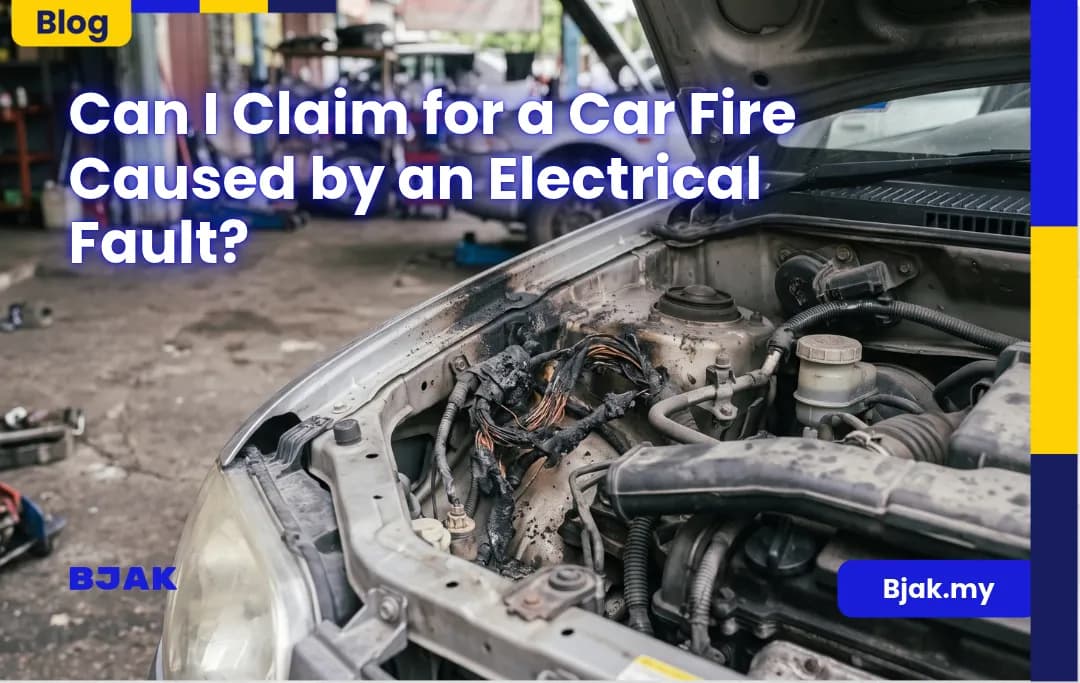
For example, a damaged wire may cause a short circuit. The electrical fault then starts a fire that damages the engine bay and other parts of the car.
In this situation, the insurer may consider a claim for the fire damage, subject to the policy terms and its investigation.
However, this does not mean every electrical problem or fire-related repair will be covered.
Electrical failure vs fire damage: What’s the difference?
These two situations are not treated in the same way.
Situation
Is it usually covered?
Faulty wiring stops working
Generally not covered
Electrical component fails without causing a fire
Generally not covered
Electrical fault causes a fire that damages the car
May be covered under comprehensive or TPFT
Fire damages your car, but you have third-party-only insurance
Not covered for damage to your own car
Mechanical and electrical breakdown are common policy exclusions. Fire, however, is a separate insured event under comprehensive and TPFT policies.
This means the insurer may cover the damage caused by the fire, while the cost of repairing or replacing the faulty electrical component may remain excluded.
Which types of car insurance cover fire damage?
Your type of insurance determines whether you can claim for fire damage to your own car.
Type of insurance
Fire damage to your own car
Comprehensive
Generally covered
Third-Party, Fire and Theft (TPFT)
Generally covered
Third-Party Only
Not covered
Both comprehensive and TPFT insurance generally include protection against accidental fire, subject to policy terms.
Third-party-only insurance covers your legal liability to other people. It does not cover fire damage to your own vehicle.
Having comprehensive or TPFT insurance does not guarantee that every fire claim will be approved. Your insurer will investigate the incident and check whether the damage is covered under your policy.
Your insurer may reject a claim if the loss falls under an exclusion in your policy or if the policy conditions were not followed.
For example:
Electrical failure only: The claim is for faulty wiring or a failed electrical component, rather than damage caused by fire.
Undeclared modifications: The car has modifications that should have been disclosed or approved by the insurer, but were not. This may affect your claim depending on the modification and policy terms.
Excluded circumstances: The fire happened under circumstances excluded by your policy.
Incorrect information: Important details about the car or its use were not disclosed accurately.
The insurer may investigate the cause of the fire before deciding on your claim. Check your policy wording and contact your insurer if you are unsure whether a modification or repair affects your coverage.
What should you do if your car catches fire?
Your safety comes first. Do not try to save your belongings or investigate the cause while the car is burning.
Follow these steps:
Stop and get out: Pull over safely, switch off the engine and get everyone out of the car.
Move away: Keep a safe distance from the vehicle. Do not open the bonnet if there are flames or heavy smoke.
Call for help: Contact the fire and rescue service through 999.
Inform your insurer: Report the incident and ask about the claim process.
Keep evidence: Once the area is safe, take photos of the damage if you can do so safely. Keep any relevant reports and documents.
Wait for instructions: Do not arrange repairs or dispose of damaged parts before your insurer advises you on the next steps.
Your insurer may request a fire report, police report, photographs, repair estimates or other documents to assess the claim.
Check your car insurance coverage
A car fire can cause serious damage, even if it starts with a small electrical fault. Comprehensive and TPFT insurance generally cover accidental fire damage, but electrical breakdown itself is usually excluded.
Does comprehensive insurance cover an electrical short circuit?
It generally does not cover the cost of repairing an electrical fault on its own. However, if the short circuit causes a fire that damages your car, the resulting fire damage may be covered, subject to your policy.
Does TPFT insurance cover a car fire caused by faulty wiring?
Generally, yes. TPFT insurance includes protection against accidental fire damage to your own car. The insurer will still assess the cause of the fire and the policy exclusions.
Will my insurance cover the cost of replacing faulty wiring?
Usually not if the wiring failed due to an electrical breakdown. This is commonly excluded from motor insurance. However, damage caused by a resulting fire may be assessed separately.
Can I claim if the fire damages only part of my car?
You may be able to claim if the damage was caused by an insured fire event. The insurer will assess the damage, cause of the fire and applicable policy terms.
Will a car fire claim affect my NCD?
An approved claim for fire damage to your own car may affect your No Claim Discount (NCD). Check with your insurer to understand how the claim will affect your NCD.

 Nabil Farhan· · 4 min read