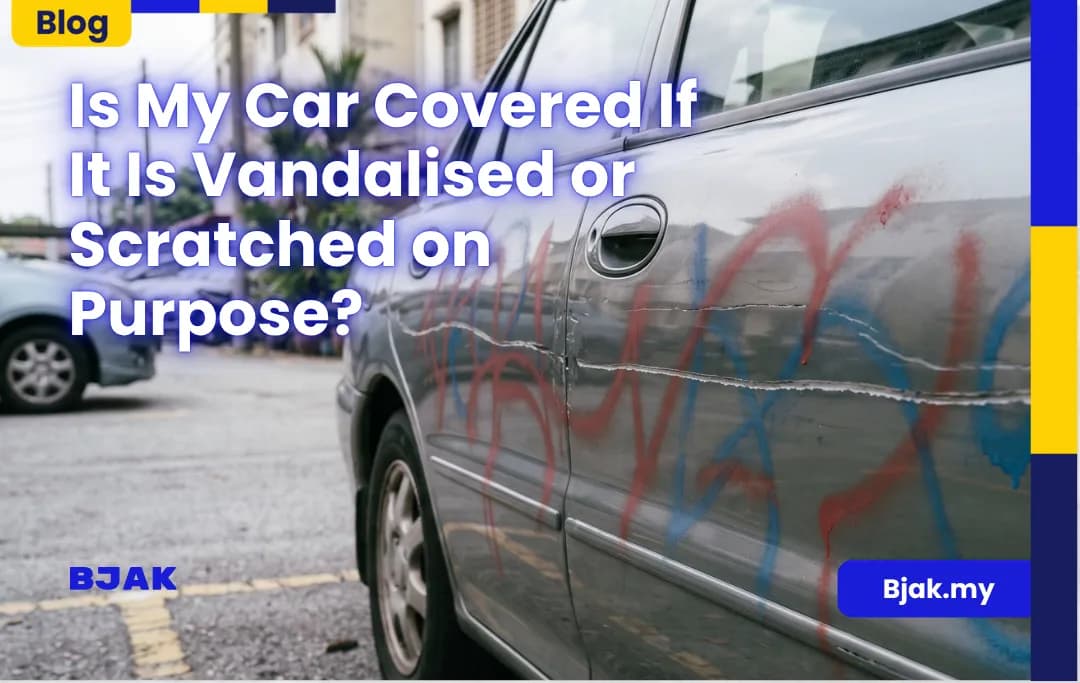
Your car insurance may cover damage caused by vandalism, including deliberate scratches, broken mirrors or damaged body panels. If you have comprehensive car insurance, malicious damage by another person may be covered under your policy.
However, not every type of intentional damage is automatically covered. Your insurer will consider how the damage happened, the evidence you provide and the exclusions in your policy.
Does car insurance cover vandalism?
Yes, vandalism may be covered under comprehensive car insurance.
Some Malaysian comprehensive motor policies include malicious acts as a covered event under the section for loss or damage to your own vehicle.
This may include incidents such as:
Someone deliberately scratching your car with a sharp object.
A person damaging your side mirror or door handle.
Someone smashing your car window.
Deliberate damage to your car’s body panels or paintwork.
For example, MSIG’s private car policy lists malicious acts as a covered event under comprehensive cover. However, the exact wording and conditions may differ between insurers.
This means you should check your policy wording rather than assume every vandalism incident will qualify. You can read our guide to comprehensive car insurance and its coverage to understand what this type of policy generally protects.
What types of vandalism can be covered?
The insurer will assess the cause and nature of the damage before deciding whether your claim is covered.
Here are some examples:
Type of damage
Possible insurance coverage
Someone keys or scratches your car deliberately
May be covered as malicious damage under comprehensive insurance
Someone breaks your side mirror
May be covered, depending on the circumstances and policy wording
Someone smashes your car window
May be covered as malicious damage, subject to policy terms
Someone damages your car’s paintwork
May be covered if the damage was deliberate and qualifies as a malicious act
Your car is damaged during a riot
May be excluded under the standard policy unless the relevant extension applies
You accidentally scratch your own car
Generally not treated as malicious damage by a third party
The key difference is whether the damage was caused by another person’s deliberate act, an accident or an event specifically excluded by your policy.
Does comprehensive insurance cover intentional scratches?
It may. If someone deliberately scratches your car, the damage may fall under the malicious damage section of your comprehensive policy.
For example, someone may use a key or another sharp object to scratch your car door while it is parked outside your home or at a shopping centre.
However, you may need to provide evidence to support your claim. Your insurer may ask for:
Photographs of the scratches and surrounding areas.
A police report describing what happened.
CCTV footage, if available.
Witness details or other supporting information.
If you discover scratches on your parked car but do not know who caused them, you may still have a claim option under comprehensive insurance. The insurer will assess the available evidence and circumstances.
Is vandalism the same as damage caused during a riot?
No. These incidents may be treated differently under your motor insurance policy.
Vandalism generally refers to deliberate damage caused by an individual or group. For example, someone may intentionally scratch your car or smash its windows.
Damage during a riot, strike or civil commotion may fall under a separate policy exclusion. Some insurers offer a Strike, Riot and Civil Commotion (SRCC) extension to provide additional protection for these events.
Do not assume that ordinary malicious damage cover automatically includes damage caused during a riot. Check your policy wording and any extensions listed in your policy schedule.
If you find that someone has deliberately damaged your car, take these steps before arranging repairs.
1. Take photographs and videos
Capture clear pictures of the scratches, dents, broken parts and other damage. Take wider shots to show the vehicle’s location and surrounding area as well.
2. Check for CCTV footage
If the incident happened at a shopping centre, office or residential car park, contact the management or security team to ask whether CCTV footage is available.
3. Make a police report
Report the incident at a nearby police station. Explain when and where you discovered the damage and provide any evidence you have.
Inform your insurer about the incident and ask about the documents and claim procedure. Do this before arranging repairs.
5. Follow the insurer’s inspection and repair instructions
Your insurer may need to inspect the vehicle or direct you to an approved panel workshop. Avoid repairing or repainting the damaged area before receiving instructions, unless your insurer has approved it.
It may. If you claim for malicious damage under your own comprehensive policy, your No Claim Discount (NCD) will generally be affected.
This is because the claim is usually handled as a claim for damage to your own vehicle.
Before deciding, compare the estimated repair cost with your policy excess and the possible loss of NCD.
For example:
If the scratches are minor, paying for repairs yourself may be more practical.
If the damage is extensive, making an insurance claim may be worth considering.
If the person responsible is identified, ask your insurer whether another claim route is available.
The final impact depends on the claim type and policy terms. Confirm the details with your insurer before proceeding.
What if my insurer rejects my vandalism claim?
If your insurer rejects your claim, ask for the reason in writing and request the specific policy clause used to make the decision.
You can then:
Review the malicious damage coverage and exclusions in your policy.
Check whether the insurer has considered your police report, photographs and other evidence.
Provide any additional information that may support your claim.
Submit a formal complaint to your insurer if you disagree with its decision.
If you remain dissatisfied with the insurer’s final decision, you may be able to refer the dispute to the Financial Markets Ombudsman Service (FMOS), subject to its eligibility requirements.
Compare car insurance before you renew
Vandalism protection is one of the coverage details worth checking before choosing a car insurance policy. Compare the benefits, exclusions and available extensions so you understand what your policy protects.
Does comprehensive insurance cover someone keying my car?
It may. Deliberate scratches caused by another person may qualify as malicious damage under comprehensive insurance. Your insurer will assess the evidence and policy terms before deciding.
Can I claim if I do not know who vandalised my car?
You may still be able to claim under comprehensive insurance, depending on your policy and the available evidence. Make a police report, take photographs and check for CCTV footage before contacting your insurer.
Does third-party insurance cover a scratched car?
No. Third-party-only insurance generally does not cover damage to your own vehicle, including deliberate scratches or vandalism.
Do I need a police report for a vandalism claim?
Your insurer may require a police report to assess a malicious damage claim. It is advisable to report the incident and keep a copy of the report for your claim.
Will my NCD be affected if I claim for vandalism?
Your NCD will generally be affected if you make a claim for malicious damage under your own comprehensive policy. Check with your insurer before deciding whether to claim.
Does car insurance cover damage caused during a riot?
Not necessarily. Riot, strike and civil commotion may be excluded under the standard policy. You may need an additional SRCC extension, depending on your insurer and policy.

 Nabil Farhan· · 6 min read