When you buy car insurance, renew your policy or make a claim, you should be treated fairly. To protect customers, Bank Negara Malaysia (BNM) has introduced the Fair Treatment of Financial Consumers (FTFC) policy.
Under this policy, insurers, takaful operators and other financial service providers are expected to treat customers fairly. This includes providing clear information, recommending suitable products and ensuring that claims are handled properly.
So, what do these rules mean for car insurance and takaful customers?
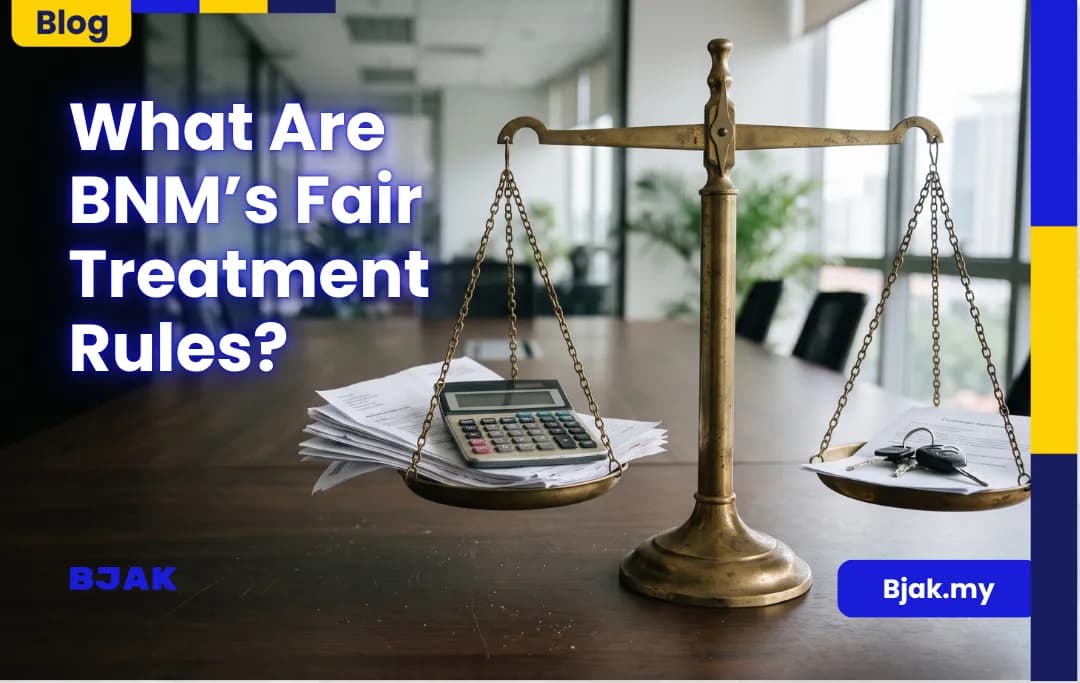
What are BNM’s Fair Treatment Rules?
BNM’s Fair Treatment of Financial Consumers policy sets out how customers should be treated by financial service providers.
It is designed to protect consumers from unfair practices and ensure that they are given enough information to make informed decisions.
The policy applies to relevant financial service providers, including licensed insurers, takaful operators and approved financial advisers.
In addition, seven key outcomes have been set to guide how these providers should deal with customers.
The seven fair-treatment outcomes
BNM’s expected outcome
What it means for you
1. Customers come first
Customers’ interests should be prioritised instead of focusing only on sales.
2. No unfair treatment
Unfair discrimination and unreasonable policy terms should not be imposed on customers.
3. Clear information
Coverage, exclusions, fees and policy conditions should be explained clearly.
4. Responsible staff and agents
Customers should be served carefully and professionally by employees and agents.
5. Suitable recommendations
Products should be recommended based on customers’ needs and circumstances.
6. Fair claims and complaints handling
Claims and complaints should be handled fairly and without unnecessary delays.
7. Support for vulnerable customers
Additional support should be provided to customers who may need extra assistance.
How do these rules protect car insurance customers?
These outcomes are reflected in different stages of your insurance experience. For example, they affect how a policy is explained, how products are sold and how claims are handled.
1. Clear policy information should be provided
Before a policy is purchased, customers should be given clear information about what is covered and what is excluded.
This includes excess, add-ons, fees and other policy conditions.
For example, flood damage should not be presented as automatically covered if a separate Special Perils add-on is required. Instead, the additional protection and its cost should be explained before the policy is purchased.
2. Misleading sales practices should be avoided
Insurance products should be explained accurately, while recommendations should be based on customers’ needs.
Important exclusions should not be hidden, and product benefits should not be misrepresented. In addition, customers should not be pressured into buying products without being given a proper explanation.
3. Claims should be handled fairly
When a claim is submitted, it should be assessed according to the policy terms.
If a claim is rejected or only partly approved, the reasons should be explained to the customer. The relevant policy conditions can also be requested for clarification.
However, fair treatment does not mean that every claim must be approved. Instead, each claim should be assessed properly, and the decision should be communicated clearly.
4. Complaint channels should be made available
Customers should be given access to a proper complaint process by their insurer or takaful operator.
Therefore, if you are unhappy with a service, policy explanation or claim decision, a formal complaint can first be submitted to the provider.
What can you do if an insurer treats you unfairly?
If you believe you have been treated unfairly, a formal complaint should first be submitted to your insurer’s customer service or complaints unit.
If the issue remains unresolved, it can be raised with BNM through its official channels, such as BNMLINK.
For eligible financial disputes, the matter may also be referred to the Financial Markets Ombudsman Service (FMOS). However, not every dispute is covered, as FMOS has its own eligibility requirements.
Throughout this process, copies of your policy, payment records, claim documents, emails and complaint responses should be kept. These records may be needed to support your case.
Does BNM guarantee that my complaint will be resolved in my favour?
No. Although BNM supervises financial service providers and sets rules for customer protection, every complaint is not automatically decided in the customer’s favour.
For example, BNM does not automatically overturn an insurer’s decision or require every disputed claim to be approved.
Claims must still be assessed based on the policy terms and relevant facts. If the decision is disputed, the available complaint and dispute-resolution channels can be used.
Know what to expect from your insurer
BNM’s fair-treatment rules are intended to make insurance services clearer and fairer for customers.
As a car insurance customer, you should be provided with clear information, suitable recommendations and fair treatment when claims or complaints are handled.
Yes. Relevant takaful operators are also covered by the policy. Participants should be treated fairly when products are explained, contributions are managed and claims are handled.
Can I complain to BNM if an insurance agent gives me false information?
Yes. A complaint can be submitted through BNM’s official channels. However, the issue should generally be raised with the insurer first, and its response should be kept as a record.
Can BNM force an insurer to approve my claim?
Not automatically. Although insurers are supervised by BNM, claims must still be assessed according to policy terms. Eligible disputes may then be referred to FMOS.

 Nabil Farhan· · 4 min read