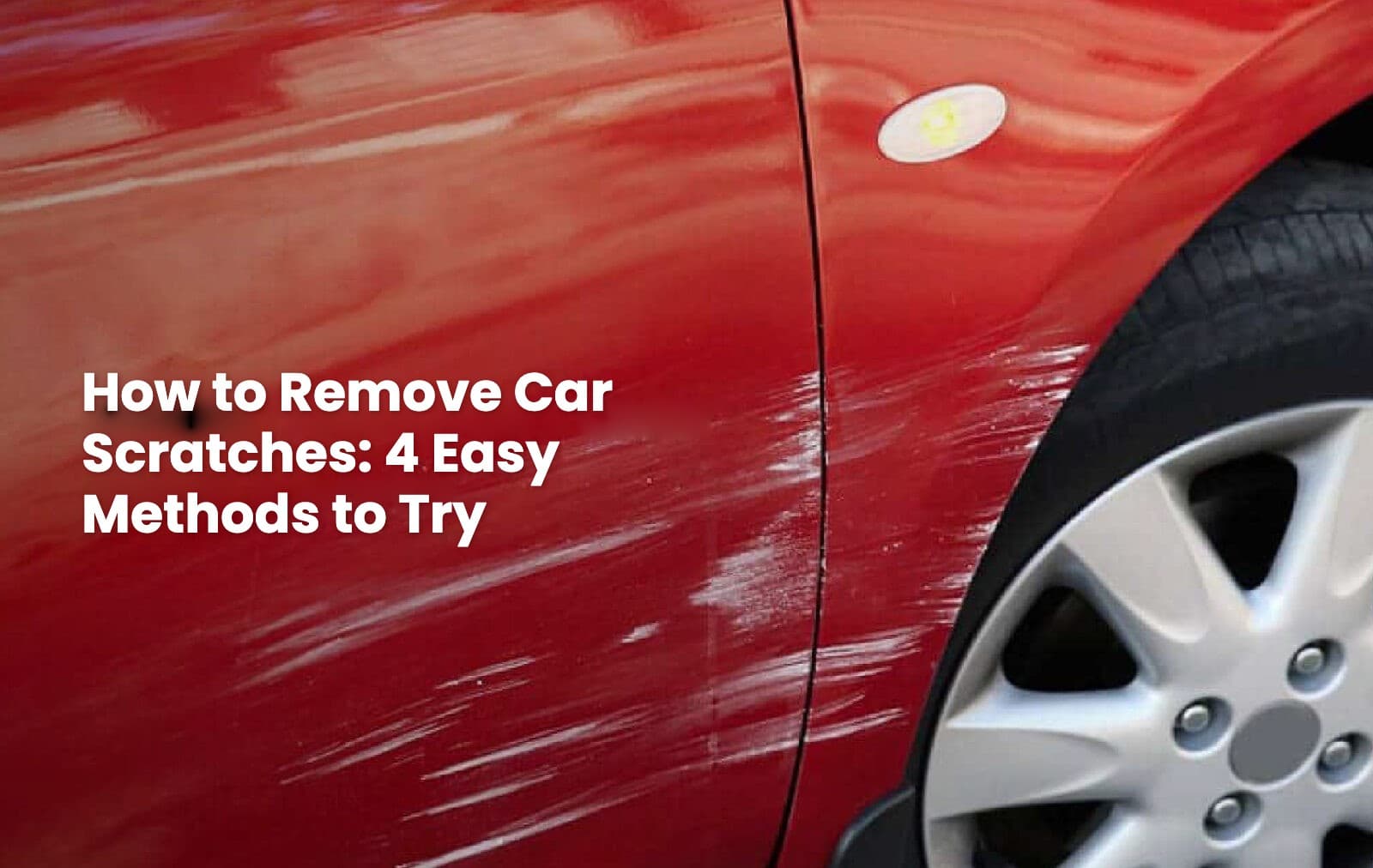
Scratches on a car are a common headache for Malaysian drivers. They can come from a tight car park, a low wall, a tree branch or another vehicle, and they usually show up when you least expect them.
The good news is that not every mark needs a workshop visit. Some “scratches” are only dirt, scuffs or residue sitting on top of the paint. This guide covers 4 simple methods you can try at home, how to use each one carefully, and when it is wiser to leave the job to a professional.
First, check how deep the scratch is
Before you try anything, wash the area with clean water and dry it. Then look closely. A light mark that sits only on the surface is the only kind worth trying to fix yourself.
What you see
What it usually means
What to do
A light line or scuff that disappears when wet
Residue or a very shallow mark in the top layer
Safe to try the methods below
A clear line you can feel with your fingernail
The scratch may have cut into the clear coat or paint
Be careful. Consider a professional
Grey, white or silver showing underneath
The scratch has reached the primer or metal
Do not rub. Go to a workshop
Paint flaking or a large damaged area
The paint layer is already damaged
Go to a workshop
4 methods to remove car scratches
1. WD-40
WD-40 is often used to lift sticky residue and light stains. If the “scratch” on your car is really a mark left by another surface, such as paint transfer or a rubber scuff, cleaning it first may be enough.
How to use it:
Wash the area and dry it.
Spray a small amount of WD-40 onto a clean cloth, not straight onto the car.
Wipe the mark gently.
Wipe the area dry with another clean cloth.
Keep in mind that WD-40 cleans. It does not repair paint. If the paint itself has been scratched, the mark will still be there.
2. Toothpaste
Many people share toothpaste as a quick fix for car scratches. Toothpaste contains fine abrasive particles, so it may soften a very light surface mark. Used carelessly, it can also dull or wear down the protective layer of the paint.
If you still want to try it:
Wash the car body and make sure the mark is very shallow.
Use a small amount of plain white toothpaste on a soft cloth.
Rub gently in a small area. Do not scrub hard or for a long time.
Rinse and dry the area, then check the result.
If you need to press hard before you see any change, stop. Rubbing harder is how a small mark becomes a bigger problem.
3. Car scratch remover
A product made for car paint is usually a better choice than household items. Car scratch removers are designed for vehicle paint and are meant for light surface scratches.
Read the instructions on the product before you start.
Test a small, hidden spot first to see how the paint reacts.
Apply only to light scratches, in the amount the label recommends.
Stop if the scratch reaches the primer or metal.
Do not keep polishing the same spot to save a workshop bill. Over-polishing can thin the paint and leave the area looking worse.
4. Magic sponge
A magic sponge can remove stubborn stains around the home, which is why it is often suggested for cars. It is not recommended for car paint. A magic sponge works like very fine sandpaper, so rubbing it on paint can dull the finish or wear away the clear coat.
If you are unsure whether a mark is dirt, residue or a real scratch, clean it gently with water and a soft cloth first. Do not reach for the sponge.
Quick comparison
Method
Best for
Main risk
WD-40
Residue, sticky marks, light stains
Does not repair real paint scratches
Toothpaste
Very light surface marks
Can dull or wear the paint if rubbed too hard
Car scratch remover
Light scratches in the paint
Over-polishing can thin the paint
Magic sponge
Not recommended for paint
Abrasive and may damage the clear coat
When to leave it to a professional
Home methods are for light marks only. Take your car to a reputable car care shop or workshop if:
You can see the primer, which is usually a different colour from the car.
You can see bare metal.
The scratch is deep or you can clearly feel it with your fingernail.
The paint is flaking or peeling.
The damaged area is large.
The mark is still obvious after gentle cleaning.
Deep scratches left untreated may allow moisture to reach the metal underneath, so it is better to have them checked early. A professional can tell you whether a polish, touch-up or respray is needed, and what it is likely to cost for your car.
Do not forget your car insurance
Looking after your car’s appearance is good, but keep an eye on your insurance and road tax too. Under Section 90 of the Road Transport Act 1987, a vehicle used on the road must have at least valid third-party insurance. The law is strict about this.
Under the current Section 90(2), a conviction can mean a fine of up to RM1,000, imprisonment of up to 3 months, or both. The court may also disqualify the offender from holding a driving licence for 12 months, unless it orders otherwise for special reasons.
If your policy is close to expiry, renew it on time. You can compare car insurance quotes from multiple insurers and takaful operators on BJAK and choose the cover that suits your needs.
Light surface marks may be fixed at home with a little patience, a clean cloth and gentle pressure. WD-40, toothpaste and a proper car scratch remover can help in the right situation, while a magic sponge is best kept away from your paint. When the scratch is deep, stop early and let a professional take over.
It may soften a very light surface mark, but it is not a proper paint repair. Toothpaste is mildly abrasive, so it can dull or wear the clear coat if you rub too hard. If you need strong pressure to see a result, stop.
Does WD-40 remove car scratches?
WD-40 can help remove residue, scuffs left by other objects and sticky marks. It cannot repair paint that has been scratched, so a real scratch will still be visible afterwards.
Can I use a magic sponge on my car paint?
It is not recommended. A magic sponge is abrasive and may dull the finish or damage the clear coat. Use water, a soft cloth or a product made for car paint instead.
How do I know if a scratch is too deep to fix myself?
If you can feel the scratch with your fingernail, see the primer or bare metal, or notice paint flaking, it is too deep for home methods. Have a car care shop or workshop take a look.
Will my car insurance cover a scratch?
It depends on your policy type, the cause of the damage and your excess. Check your policy wording or ask your insurer or takaful operator. For small repairs, it can be cheaper to pay yourself, so compare the cost before you claim.
Is it illegal to drive without car insurance in Malaysia?
Yes. A vehicle used on the road must have at least valid third-party insurance under Section 90 of the Road Transport Act 1987. A conviction can mean a fine, imprisonment or both, plus licence disqualification.

 Nabil Farhan· · 5 min read